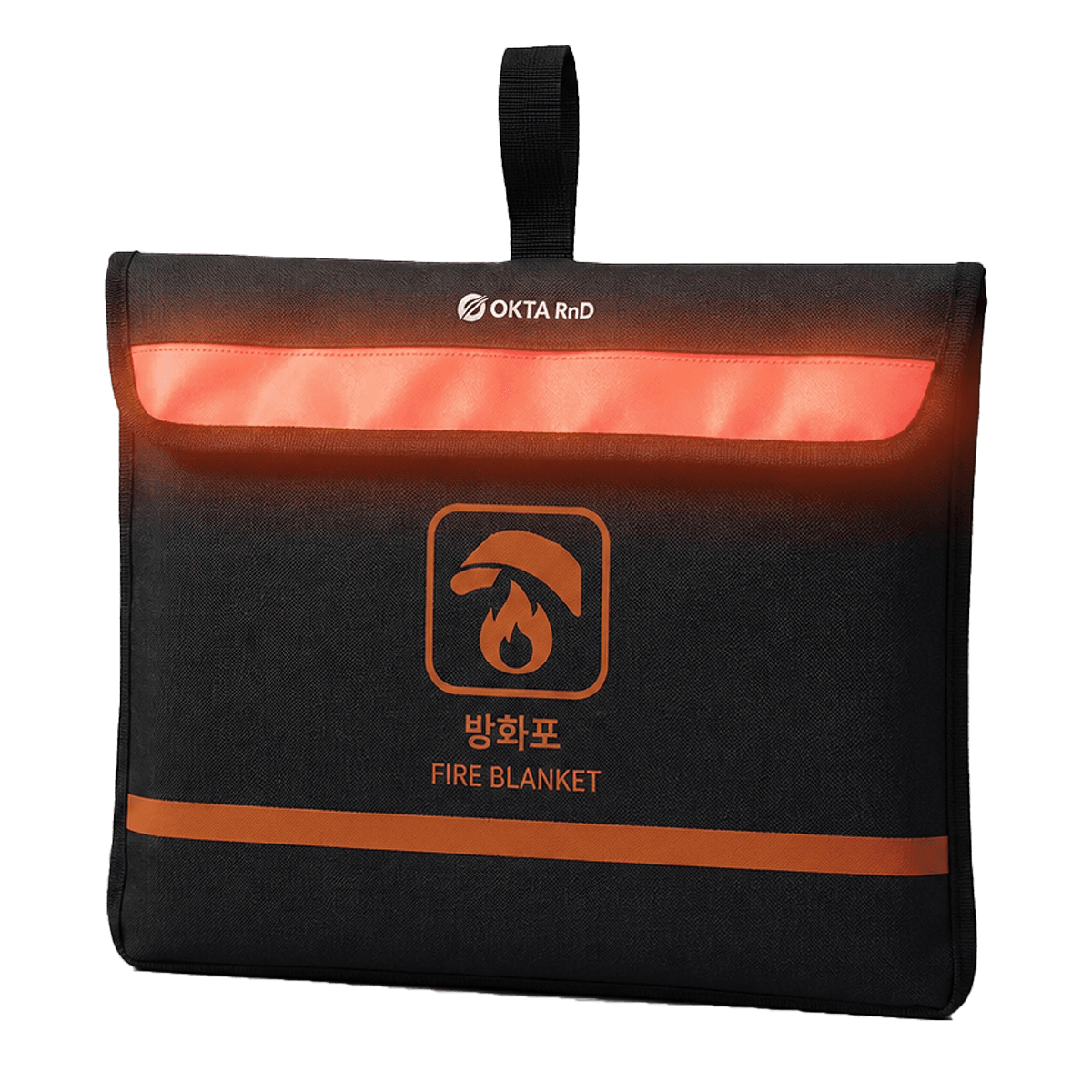
Fire Blanket (Flame-Retardant Blanket) OKTA-TC250

Fire Protection · Flame Retardancy

Fire Blanket(Flame-Retardant Blanket)OKTA-TC250

A refractory carbon-fiber fire blanket engineered for temperatures up to 1,000°C

A pouch-type safety product that covers flames to restrict oxygen supply and fire spread in homes, workplaces, traditional markets, transport facilities, and industrial sites. It is lightweight to store and quick to deploy in an emergency.

Purchase information

Contact us for pricing

Purchase inquiry

Original key features

OKTA-TC250 Key Features

Ultra-high heat resistance at 1,000°C

Concentrated refractory carbon-fiber technology completely blocks flames without melting or burning, even at an extreme temperature of 1,000°C. It can be used with confidence during sudden temperature rises caused by battery explosions or kitchen fires.

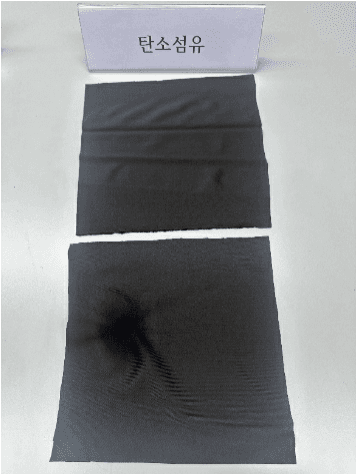
At least 1.5 times lighter than conventional products

The lightweight design overturns the assumption that fire blankets must be heavy and bulky. Because it is at least 1.5 times lighter than conventional products, children, older adults, and field personnel can quickly deploy it in an emergency, with greatly improved portability.

Cost-effective reusability

This is not a disposable product that must be discarded after one use. Its high-quality carbon-fiber material is resistant to damage, allowing reuse after inspection and reducing long-term safety-management costs.

Advanced refractory carbon-fiber material

It is made primarily from refractory carbon fiber used in aerospace and specialized industries. The material minimizes toxic-gas generation and causes less skin irritation when handled, making it safer to use.

Korea Fire Institute

KFI-certified product tested for flex durability, 45-degree combustion, and smoke density

Why OKTA-TC250

A fire blanket for a wide range of everyday fire emergencies

Refractory carbon-fiber technology helps block high-temperature flames and radiant heat. It is easier to carry and deploy than conventional heavy fire blankets and can be reused after a thorough post-use inspection.

How to use

Test-verified safety with a simple deployment method

After securing a safe distance during the early stage of a fire, hold both handles, unfold the blanket, and completely cover the source. Always prioritize evacuation and emergency reporting, and inspect the blanket for damage after use.

Heat comparison

Performance Tests of Conventional Fire Blankets

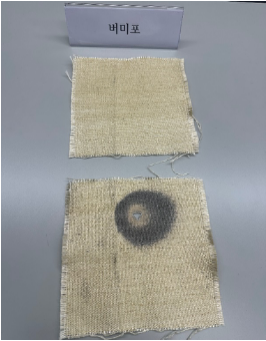
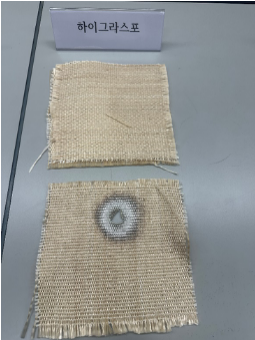
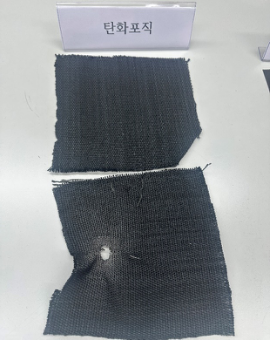
Conventional fire blankets: burned and developed holes in approximately 10 seconds at 1,000°C.

Burn hole after 13 seconds at 1,000°C

Burn hole after 10 seconds at 1,000°C

Combustion and ignition after 2 seconds at 1,000°C

Conventional fire blanket test result after 13 seconds
Conventional fire blanket test result after 10 seconds
Conventional fire blanket test result after 2 seconds

OKTA-TC250 test

Newly Developed Fire-Resistant Fabric That Withstands 1,000°C: Fire Blanket (Flame-Retardant Blanket) OKTA-TC250

Comparative testing confirmed that the newly developed Fire Blanket (Flame-Retardant Blanket) OKTA-TC250 showed no abnormalities after being heated at 1,000°C for more than one minute.

OKTA-TC250 heated at 1,000°C for more than one minute

OKTA-TC250 high-temperature heating test result

Applications

Various Applications of Fire Blanket (Flame-Retardant Blanket) OKTA-TC250

Protecting Cultural Heritage from Wildfires

Protecting Cultural Heritage from Wildfires

Electric Vehicle Fires

Electric Vehicle Fires

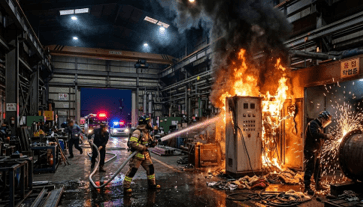
Preventing Electrical and Welding Fires at Industrial Sites

Preventing Electrical and Welding Fires at Industrial Sites

Portable Battery Charger Fires

Portable Battery Charger Fires

Kitchen Fires

Kitchen Fires

Fire Prevention for Camping and Wood-Fire Covers

Fire Prevention for Camping and Wood-Fire Covers

Heritage protection

Conventional Installation of Fire Blankets (Flame-Retardant Blankets) to Prevent the Spread of Wildfire Flames

Manual installation required 12 people and two hours, focused mainly on walls, and left wooden buildings in wildfire-spread areas vulnerable to destruction.

Limitations of conventional fire-blanket installation for preventing wildfire spread

Installation requirements

Ten Essential Requirements for Installing Flame-Retardant Fabric to Protect National Heritage

Improvement checklist and final installation-system design for preventing flame spread

Ten essential requirements were selected through first- and second-stage prototype field demonstrations and interviews with the heritage-care project team.

Field expert opinion: simple methods cannot adequately withstand strong winds or support the material's weight, so developing a partially fixed installation system is the most practical approach.

No.Features and PerformanceSuitability
1No direct impact on the structural frame.
2The entire wooden structure can be covered.
3The screen remains free of sagging and gaps.
4Automatic or manual deployment is simple.
5The system resists deformation or collapse at 10 m/s wind speed.
6Sections can be connected up to 5 m high.
7At least two people can operate the system.
8Two people can install it within 30 minutes.
9Fixed or portable installation is available.
10The system adapts to various roof types.

Final design

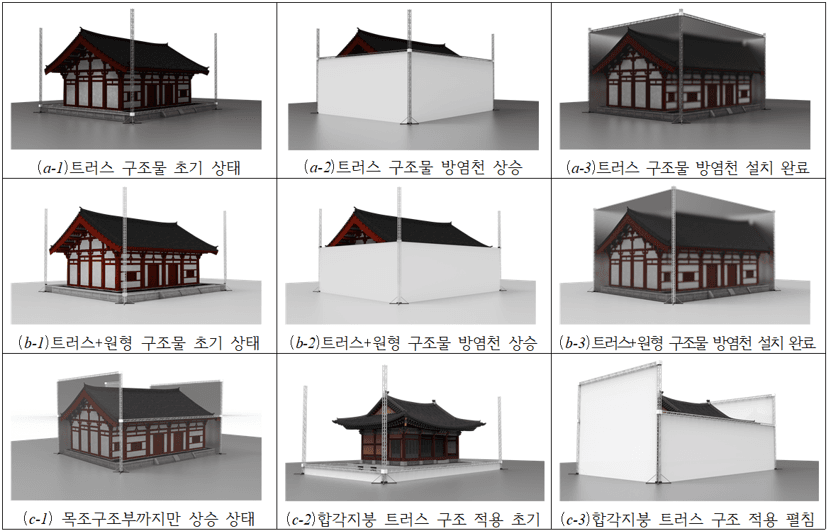
Final Flame-Retardant Fabric Installation-System Design That Resolves the Limitations

Modular truss + hoist structure

Final flame-retardant fabric installation-system design for national heritage protection

Full deployment of the flame-retardant fabric

Deployment adjusted to the eave height

Product consultation

Discuss your requirements and product configuration

Tell us about your environment and required quantity, and we will recommend the right purchase approach.

Purchase consultation →